
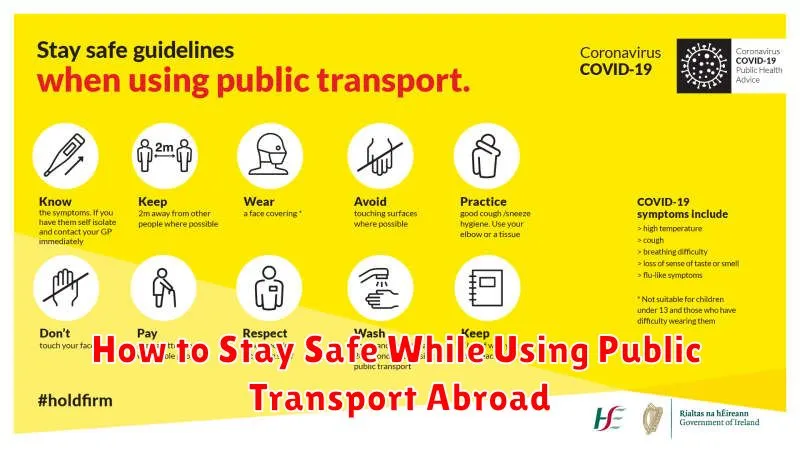
Traveling abroad can be an exciting adventure, but navigating unfamiliar public transport systems can sometimes feel daunting. Safety should always be a top priority, whether you’re using the metro in Paris, a bus in Bangkok, or a train in Tokyo. This article provides essential tips on how to stay safe while using public transport abroad, empowering you to travel with confidence and peace of mind. Learn how to protect your belongings, navigate unfamiliar routes, and stay aware of your surroundings to ensure a smooth and secure journey.
From understanding local customs to safeguarding your valuables and recognizing potential dangers, this guide offers practical advice for using public transport safely in any foreign country. We’ll cover key aspects of safe travel, such as identifying reliable transportation options, protecting yourself from scams, and what to do in case of an emergency. With these proactive strategies, you can minimize risks and focus on enjoying the unique experiences that public transport abroad offers.
Researching Transit Systems in Advance
Before embarking on your trip, familiarize yourself with the local public transport system. Understand the different modes of transport available, such as buses, trams, subways, or trains.
Identify key routes and schedules relevant to your planned destinations. Note operating hours, frequency, and any potential disruptions or planned maintenance.
Research ticketing options. Understand whether you’ll need single-use tickets, day passes, or travel cards. Pre-purchasing tickets or passes online can often save time and money.
Keeping Your Belongings Secure
Protecting your valuables is crucial while using public transport. Keep bags zipped and close to your body. Consider using a money belt for important documents and cash.
Avoid displaying expensive electronics or jewelry. Be extra vigilant in crowded areas, which are prime spots for pickpockets. If you have luggage, use locks and keep it within your sight at all times.
Avoiding Common Transit Scams
Be aware of common scams targeting tourists on public transport. These often involve distractions, where one person creates a diversion while another steals your belongings. Keep valuables secure and close to your body.
Beware of overly helpful individuals. While kindness exists, be cautious of those who insist on assisting with your luggage or directing you, especially if they lead you away from designated areas.
Validate ticket prices beforehand. Some scammers pose as officials and charge inflated fares. Purchase tickets from authorized personnel or machines.
Using Official Stations and Stops Only
Always board and alight at designated stations and official stops. These locations are typically well-lit, monitored, and offer a greater degree of security. Avoid using unofficial or unmarked stops.
Unofficial stops often lack basic safety measures and increase your vulnerability to crime. Be sure to identify official station signage or designated waiting areas.
Watching for Overcharging or Fake Tickets
Be vigilant about ticket pricing. Research typical fares beforehand or consult official transportation websites. If a price seems excessively high, question it. Some vendors might attempt to overcharge unsuspecting tourists.
Ensure your ticket is legitimate. Look for official markings or security features. If possible, purchase tickets from designated booths or authorized personnel rather than unofficial vendors. Counterfeit tickets can lead to fines or denial of boarding.
Blending in With Local Commuters
Blending in reduces your visibility as a tourist, a potential target for petty theft. Observe local commuters’ dress code. Avoid flashy jewelry or clothing that screams “tourist.” A simple, understated appearance can help you move more discreetly.
Understand local customs. This includes queuing etiquette, seating arrangements, and general behavior on public transport. Observe how locals interact and try to emulate their behavior respectfully. This shows respect and helps you avoid unwanted attention.
Project Confidence. Even if you’re lost, avoid looking overtly confused or consulting maps excessively in public. A confident demeanor, even if feigned, can deter potential pickpockets or scammers.
Emergency Contacts and Local Language Phrases
Before embarking on your journey, research essential local emergency numbers. This includes police, fire, and ambulance services. Save these contacts in your phone and keep a physical copy accessible.
Learning basic local phrases can be invaluable. Key phrases include “Help,” “Police,” “Hospital,” “Excuse me,” and “Thank you.” Consider using a translation app or carrying a pocket phrasebook for quick reference in emergencies or everyday interactions.
